AI is no longer something we can ignore. It is already becoming part of how people study, work, communicate, create content, run businesses, and solve problems. Students are already using AI, sometimes with guidance, and sometimes without fully understanding how to use it properly.
So, the real question is not whether students will use AI.
The real question is: who will guide them?
That is why teachers are more important now than ever before.
In this new AI-driven economy, education cannot only be about memorizing notes and passing exams. Students need to learn how to think, ask better questions, solve problems, create new ideas, and use technology responsibly. AI can support this learning journey, but only when students are taught how to use it in the right way.
AI can be a powerful learning tool. It can explain difficult topics, give examples, create practice questions, help with writing, translate content, and support students who need extra help. But without proper guidance, students may start using AI as a shortcut. They may copy answers, stop thinking deeply, or trust everything AI says without checking.
This is where teachers come in.
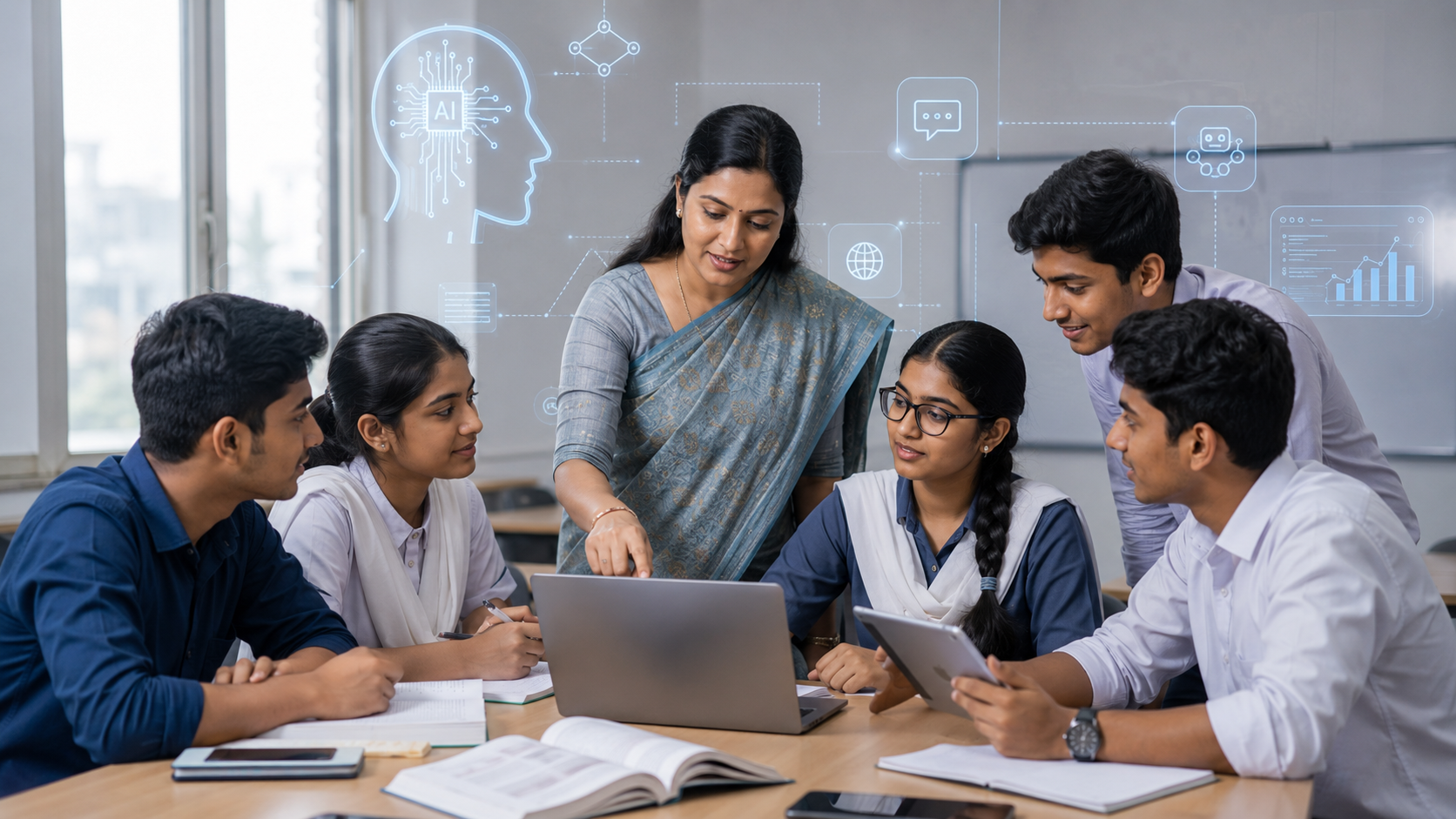
Teachers can show students that AI is not an answer machine. It is a learning assistant. Instead of asking AI to "write my homework," students can learn to ask, "Explain this topic simply," "Give me examples," "Ask me questions to test my understanding," or "Help me improve this answer."
That small difference is very important.
AI should not replace thinking. It should improve thinking.
For teachers, AI can also be a great support system. Many teachers spend a lot of time preparing lessons, making questions, checking work, creating classroom activities, and supporting students with different learning levels. AI can help reduce some of that pressure.
A teacher can use AI to prepare lesson plans, simplify difficult topics, create quizzes, make worksheets, generate classroom examples, translate content, and create different learning materials for different students. This does not reduce the value of teachers. It actually gives teachers more time to focus on what matters most: teaching, guiding, mentoring, and understanding students.
Every classroom has different types of learners. Some students understand quickly, some need more time, and some are afraid to ask questions. AI can help teachers support these students better by creating simpler explanations, extra practice tasks, and personalized learning support.
But AI alone is not enough. A teacher's judgment, care, experience, and understanding of students cannot be replaced.
In Bangladesh, this is even more important. Many students do not have access to extra tutors, quality learning support, or modern digital resources. Many teachers also do not receive enough training on new tools. If AI education stays only in big cities or elite schools, the gap will become even bigger.
That is why teachers need AI training.
When teachers understand AI, they can bring future-ready learning into the classroom. They can help students use technology for education instead of only entertainment. They can guide students to become more confident, creative, and prepared for the future of work.
The AI economy will reward people who can think critically, communicate clearly, solve problems, and use digital tools properly. Teachers are the ones who can build these skills from the classroom.
AI will change education, but it should not remove the human side of education. Students still need encouragement, discipline, values, emotional support, and real guidance. AI can give information, but teachers give direction. AI can explain a topic, but teachers understand the student. AI can generate content, but teachers build character, confidence, and curiosity.
So, AI in education is not about replacing teachers.
It is about empowering teachers.
The future of education will belong to teachers who are ready to learn, adapt, and guide students in this new world. If teachers become AI-enabled, students will not just use AI, they will use it wisely.
And that is exactly what we need right now: teachers who can prepare students not only for exams, but for the future.